Introduction
Solar energy has become an increasingly popular solution for generating clean electricity and reducing dependence on traditional power sources. As solar technology continues to develop, people Solar Panel For Motorcycle are exploring new ways to install solar panels in places where conventional rigid panels may not fit. One innovative solution is a solar panel for curved surface, designed to provide solar power on rounded, uneven, or non-flat structures.
Traditional solar panels are commonly installed on flat rooftops, ground-mounted frames, and other relatively straight surfaces. However, many applications require a more adaptable design. Vehicles, boats, recreational vehicles, curved roofs, and portable equipment can benefit from flexible solar panels that follow different surface shapes. Understanding how these panels work, their benefits, and their limitations can help individuals and businesses choose the right solar solution.
What Is a Solar Panel for Curved Surface?
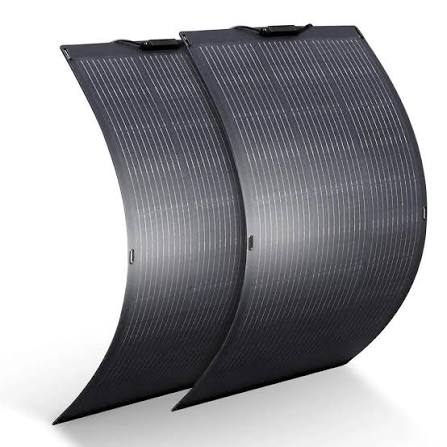
A solar panel for a curved surface is a solar energy system designed to fit or operate on a rounded or non-flat structure. Unlike conventional rigid panels, which typically require a flat mounting area, flexible solar panels can bend within specified limits to accommodate certain curved surfaces.
These panels commonly use thin-film photovoltaic technology or flexible crystalline silicon cells mounted on lightweight, adaptable materials. Their construction allows them to fit applications where traditional glass-covered panels may be difficult to install.
The amount of flexibility depends on the panel’s design. Some products are suitable for gentle curves, while others are intended for specific curved installations. It is important to understand that not every flexible panel can bend sharply, and bending a panel beyond its manufacturer’s limits can damage its cells or electrical connections.
How Do Flexible Solar Panels Work?
Flexible solar panels generate electricity through the photovoltaic effect. When sunlight reaches the solar cells, the cells convert light energy into direct-current electricity.
The generated electricity can then be used to power compatible devices, charge batteries, or supply energy to an inverter that converts direct current into alternating current for suitable appliances.
Although the operating principle is similar to that of traditional solar panels, flexible models use different materials and construction methods to improve adaptability.
Several components contribute to their operation:
- Photovoltaic cells: Capture sunlight and convert it into electricity.
- Flexible backing: Supports the solar cells while allowing the panel to follow an approved curve.
- Protective surface: Helps protect the panel from environmental exposure.
- Electrical connections: Transfer generated electricity to a charge controller, battery, or compatible power system.
- Mounting system: Keeps the panel securely attached to the curved structure.
The performance of a curved installation depends on sunlight exposure, panel orientation, temperature, shading, and the angle of the surface.
Benefits of Solar Panels for Curved Surfaces
1. Flexible Installation Options
One of the biggest advantages of flexible solar panels is their ability to accommodate surfaces that are not completely flat. This makes them useful for certain vehicle roofs, boat surfaces, curved shelters, and specialized equipment.
Instead of redesigning an entire structure to accommodate a rigid panel, users may be able to select a flexible product that matches the surface.
2. Lightweight Construction
Many flexible solar panels are lighter than conventional glass-fronted modules. This can be particularly useful for vehicles, boats, and portable applications where additional weight matters.
A lightweight solar solution may also simplify handling and installation. However, the total weight of mounting hardware, wiring, batteries, and controllers should be considered when planning a complete system.
3. Efficient Use of Available Space
Curved surfaces are often overlooked when planning solar installations. A suitable flexible panel can make these areas useful for energy generation.
For example, a compatible panel installed on an appropriately shaped vehicle roof may help charge an auxiliary battery. Similarly, a boat owner may use a flexible panel to support onboard electrical equipment.
The actual power output will depend on the available surface area and the specifications of the selected product.
4. Convenient for Mobile Applications
Flexible solar technology can be useful for people who travel regularly or require electricity away from conventional power sources.
Campers, boat owners, outdoor enthusiasts, and mobile service operators may use flexible panels to support lighting, communication equipment, small appliances, or battery charging.
A properly designed system can provide additional energy without requiring a large, permanent installation.
5. Modern and Adaptable Design
Flexible solar panels can create a low-profile appearance when installed correctly. This may be desirable on certain vehicle roofs, curved architectural features, and equipment housings.
Their adaptability gives designers more options when incorporating renewable energy into structures with unusual shapes.
Common Applications of Curved Solar Panels
Solar Panels for Vehicle Roofs
Some vehicles have rounded roofs that cannot easily accommodate conventional solar modules. Flexible panels designed for vehicle applications may provide an alternative for generating electricity.
They can support auxiliary batteries used for lighting, ventilation, communication equipment, and other compatible electrical loads. Before installation, users should check roof materials, available space, operating temperatures, and the manufacturer’s mounting requirements.
Solar Panels for Boats and Marine Equipment
Boats often have limited space and curved surfaces. Flexible solar panels can be useful for charging batteries that power navigation equipment, lights, and other onboard systems.
Marine installations require special attention to moisture resistance, salt exposure, secure attachment, and electrical safety. A panel should be specifically rated for the intended environment rather than assumed to be suitable simply because it is flexible.
Solar Panels for RVs and Campers
Recreational vehicles can benefit from solar energy when traveling or camping away from electrical hookups. Flexible panels may suit certain curved roofs where rigid panels are impractical.
They can help maintain batteries and support selected appliances, although users should calculate their daily energy requirements before deciding how much solar capacity they need.
Curved Architectural Structures
Some buildings feature domes, curved awnings, rounded roofs, or other unconventional designs. Solar technology designed for curved installations may help incorporate renewable energy into these structures.
The suitability of a particular panel depends on its permitted bending radius, mounting method, structural requirements, and expected weather exposure.
Portable and Specialized Equipment
Flexible solar panels are also used in selected portable power systems and specialized equipment. Their low weight and adaptable form can make them useful where space and mounting options are limited.
However, the panel must be compatible with the equipment’s voltage, current, and charging requirements.
How to Choose the Right Solar Panel for a Curved Surface
Selecting the right solar panel requires more than finding a product that bends. Several technical factors should be evaluated before making a purchase.
Check the Curvature Requirements
Measure the surface carefully and determine whether its curve is gentle or pronounced. Review the panel’s minimum bending radius and installation instructions.
Never force a panel to fit a curve beyond its rated flexibility. Excessive bending can cause internal damage even when the outer surface appears undamaged.
Compare Power Output
Solar panels are available in different wattage ratings. A higher-rated panel may produce more electricity under suitable conditions, but its physical size, operating temperature, and real-world exposure must also be considered.
Estimate the daily electricity consumption of the devices you want to power. Then compare that requirement with the expected output of the proposed installation.
Evaluate Durability
Outdoor panels may experience heat, rain, dust, wind, and vibration. Marine and vehicle applications can introduce additional challenges.
Look for documented weather resistance, UV protection, suitable connectors, and a warranty that covers the intended installation conditions.
Consider Installation Methods
Some panels use adhesive mounting systems, while others require dedicated brackets or alternative attachment methods. The mounting system must be compatible with both the panel and the surface.
For vehicle roofs and boats, consider how the installation will affect waterproofing, maintenance, and removal. Professional installation may be appropriate for complex systems.
Check Electrical Compatibility
Confirm the panel’s voltage and current ratings before connecting it to a battery or electrical device. A compatible charge controller may be necessary to regulate battery charging and protect the system.
For larger installations, an electrician or qualified solar installer can help ensure that wiring, fuses, controllers, and other components are correctly selected.
Flexible Solar Panels vs. Traditional Solar Panels
Flexible and traditional solar panels each offer advantages, depending on the installation.
Rigid panels generally provide a sturdy construction and are widely used for residential and commercial solar systems. They can be a practical choice where a flat mounting area is available.
Flexible panels are more adaptable to certain curved surfaces and may offer lower weight. However, some flexible models have lower efficiency, greater sensitivity to installation conditions, or different durability characteristics compared with conventional modules.
Neither option is automatically better in every situation. The right choice depends on the available space, energy requirements, budget, expected service life, and mounting conditions.
Challenges and Limitations
Despite their benefits, solar panels for curved surfaces have some limitations. Their power output may be insufficient for applications with high electricity demands, particularly when installation space is restricted.
Curved mounting can also affect the angle at which sunlight reaches different parts of a panel. If the surface causes uneven illumination, overall energy production may decrease.
Heat management is another important consideration. A panel mounted directly against a surface may have limited airflow, potentially increasing operating temperatures and reducing performance. Users should follow the manufacturer’s ventilation and mounting requirements.
Additionally, not every flexible solar panel is designed for permanent outdoor installation. Some products are intended for temporary or portable use only, so checking product specifications is essential.
The Future of Solar Technology for Curved Surfaces
Solar technology continues to evolve as manufacturers explore lighter materials, improved photovoltaic cells, and more adaptable product designs. These developments may expand the use of solar energy in transportation, architecture, marine equipment, and portable power systems.
Future products may offer improved efficiency, longer service life, and easier integration with structures that have unusual shapes. Advances in thin-film photovoltaics and flexible cell manufacturing could also create new possibilities for applications where traditional solar modules are unsuitable.
As these technologies develop, careful evaluation of performance data, safety certifications, and long-term reliability will remain important for consumers and businesses.
Conclusion
A solar panel for curved surface provides an innovative way to generate renewable electricity in locations where traditional rigid panels may not fit. Flexible solar panels can be useful for vehicles, boats, recreational vehicles, curved architectural structures, and specialized equipment.
Their lightweight construction, adaptable design, and potential for efficient space utilization make them an appealing option for certain installations. Nevertheless, users should evaluate bending limits, power output, durability, temperature management, and electrical compatibility before choosing a product.
By matching the solar panel to the shape of the surface and the energy requirements of the application, it is possible to develop a practical solar power solution. With continued improvements in photovoltaic technology, flexible solar panels may play an increasingly valuable role in making renewable energy accessible across a wider range of environments.