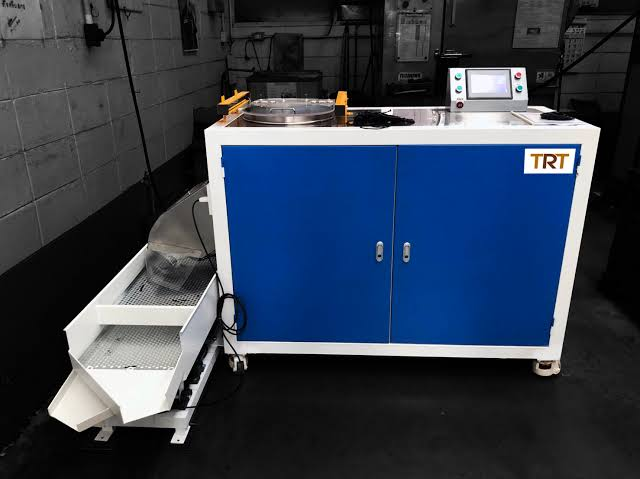
Rubber components are widely used in automotive, medical, electrical, industrial, and consumer products. After molding, these components often have unwanted excess rubber, commonly called flash, around their edges and surfaces. Removing this flash is essential for achieving clean, accurate, and high-quality finished parts. A rubber rubber deflashing machine deflashing machine provides an efficient solution by automating the finishing process and delivering consistent results.
Modern manufacturing requires speed, accuracy, and repeatability. Manual deflashing can be time-consuming and may produce inconsistent results, especially when dealing with large production volumes. A rubber deflashing machine helps manufacturers overcome these challenges by using controlled mechanical, cryogenic, thermal, or other specialized processes to remove unwanted material from molded rubber components.
What Is a Rubber Deflashing Machine?
A rubber deflashing machine is specialized industrial equipment designed to remove excess rubber or flash from molded parts. During the molding process, rubber may flow into small gaps between mold sections, creating thin unwanted edges. While these edges may seem minor, they can affect the appearance, dimensions, performance, and functionality of the final product.
The machine is designed to remove this excess material while preserving the shape and important features of the rubber component. Depending on the production requirements, different deflashing technologies can be selected. The right system can improve finishing quality while reducing labor requirements and production time.
Why Rubber Deflashing Is Important
Deflashing is an important stage in rubber part manufacturing because the final product often needs to meet strict dimensional and appearance requirements. Excess flash can interfere with assembly, sealing, movement, or other functions.
For example, rubber seals and gaskets require accurate edges to create proper sealing performance. Automotive components may need precise dimensions to fit correctly into larger assemblies. Medical and industrial rubber products may also require smooth and clean surfaces.
Using automated equipment helps manufacturers maintain consistent finishing standards. Instead of depending entirely on manual operators, companies can establish repeatable processing conditions and achieve more uniform results across production batches.
How a Rubber Deflashing Machine Improves Efficiency
One of the main advantages of automated deflashing equipment is improved production efficiency. Manual trimming requires operators to inspect and process individual components, which can take considerable time. A machine can process multiple parts according to predefined operating conditions, reducing repetitive manual work.
Automation can also help manufacturers handle larger production volumes. As demand increases, companies can maintain consistent processing without requiring a proportional increase in labor. This can improve overall productivity and help manufacturers meet production schedules more effectively.
Another important benefit is process consistency. Manual deflashing can vary depending on operator experience, concentration, and working speed. Automated equipment provides more controlled processing, helping reduce variations between individual parts.
Improving Precision and Product Quality
Precision is essential when manufacturing rubber components with strict dimensional requirements. Excessive trimming can damage the main body of a component, while insufficient trimming can leave unwanted flash behind.
A properly configured rubber deflashing machine can provide controlled material removal. This helps manufacturers maintain the intended shape of the component while removing unwanted rubber from critical areas.
Consistent finishing can also improve the visual quality of products. Clean edges and surfaces create a more professional appearance, which can be especially important for consumer-facing products and components that require high aesthetic standards.
Different Deflashing Technologies
Manufacturers can choose from several deflashing technologies depending on the rubber material, component design, production volume, and required finish.
Cryogenic deflashing uses extremely low temperatures to make unwanted flash brittle. The parts are then subjected to controlled mechanical action, causing the thin flash to break away while the main rubber component remains intact. This method is often suitable for complex parts with delicate features.
Mechanical deflashing uses controlled physical methods to remove unwanted material. It can be effective for certain rubber products and may provide a practical solution for manufacturers with specific finishing requirements.
Thermal deflashing uses controlled heat to remove thin excess material. The process must be carefully managed to prevent damage to the main component.
Each technology has different advantages, so manufacturers should evaluate their materials and production requirements before selecting equipment.
Key Benefits for Manufacturers
Investing in a modern deflashing system can provide several benefits. The first is reduced dependence on manual labor. Operators can spend less time performing repetitive trimming tasks and more time managing production processes, inspection, and other value-added activities.
Another benefit is improved consistency. Automated processing can help produce uniform results across large batches. This is particularly valuable for industries where quality standards and dimensional accuracy are critical.
Reduced processing time is another advantage. Faster finishing can increase overall production capacity and help manufacturers respond to customer demand.
Automated deflashing can also contribute to reduced material waste when the machine is correctly configured. Controlled removal minimizes unnecessary damage to finished components and supports more efficient production.
Choosing the Right Machine
Selecting the right equipment requires careful consideration of several factors. Manufacturers should evaluate the type of rubber being processed, component size, component geometry, flash thickness, production volume, and desired finishing quality.
Machine capacity is also important. A system designed for small-batch production may not be suitable for high-volume manufacturing. Similarly, a machine designed for simple components may not provide the required performance for highly complex parts.
Ease of operation and maintenance should also be considered. Equipment with accessible components, straightforward controls, and reliable construction can help reduce downtime and simplify routine maintenance.
Manufacturers should also consider energy consumption, safety features, automation capabilities, and available technical support when comparing different machines.
Applications Across Industries
Rubber deflashing equipment is used in many industries. The automotive sector uses finished rubber components for seals, gaskets, bushings, vibration-control products, and other applications. Consistent finishing is important because these components often need to meet demanding performance requirements.
In the medical industry, rubber components may be used in seals, valves, and specialized devices. Clean and precise finishing can be essential for maintaining product quality.
Industrial manufacturers also use rubber components in machinery, pumps, valves, and hydraulic systems. Electrical and electronics industries may require precisely finished rubber parts for insulation and protection.
Because rubber products are used in such a wide range of applications, deflashing technology continues to play an important role in modern manufacturing.
Maintenance and Operational Considerations
Regular maintenance is essential for keeping deflashing equipment operating efficiently. Manufacturers should follow the machine supplier’s maintenance recommendations and inspect important components at appropriate intervals.
Operators should also receive proper training. Correct loading, machine settings, inspection procedures, and safety practices can significantly affect performance. Monitoring finished parts regularly can help identify process variations before they become larger production problems.
A clean working environment and appropriate preventive maintenance can also help extend machine life and reduce unexpected downtime.
The Future of Rubber Part Finishing
Manufacturing is increasingly moving toward automation, digital monitoring, and more precise production processes. Deflashing machines are becoming part of this trend by helping manufacturers improve productivity and maintain consistent quality.
Advanced systems may incorporate automated controls, programmable settings, monitoring technologies, and integration with broader production lines. These developments can make rubber finishing more efficient while providing manufacturers with greater control over production parameters.
As industries continue to demand higher quality and faster production, automated finishing solutions are likely to become increasingly important.
Conclusion
A rubber deflashing machine is an important solution for manufacturers seeking better efficiency, precision, and consistency in rubber part finishing. By automating the removal of unwanted flash, these machines can reduce repetitive manual work, improve product appearance, support dimensional accuracy, and increase production capacity.
Choosing the appropriate technology requires consideration of the rubber material, component design, production volume, and finishing requirements. With proper equipment selection, operation, and maintenance, manufacturers can create a more reliable finishing process and improve the overall quality of their rubber products.