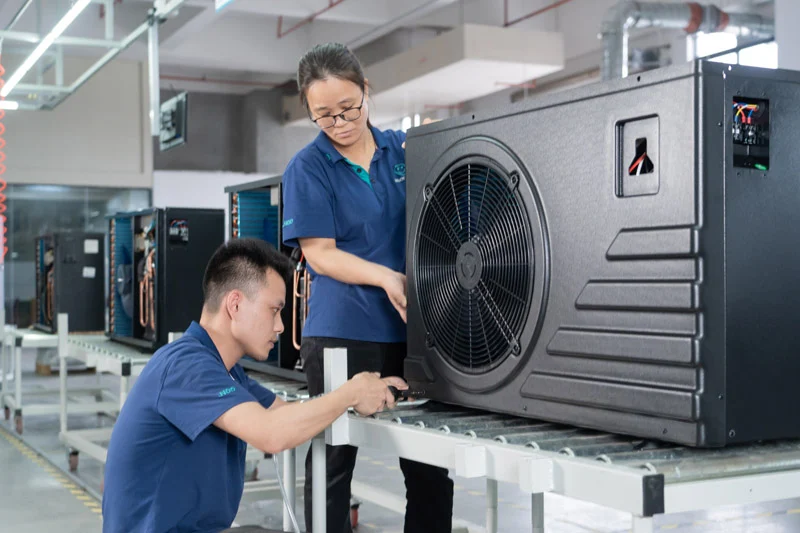
The global transition toward cleaner energy is changing the way homes, offices, factories, and commercial buildings are heated. As concerns about climate change, energy costs, and dependence on fossil fuels continue to grow, heat pump technology has emerged as an important solution for creating more efficient and sustainable heating systems. Today, leading heat pump companies are investing heavily in research, product development, smart technology, and renewable energy integration to improve how people heat and cool their buildings.
Unlike conventional heating systems that often generate heat by burning fuel, heat pumps transfer existing thermal energy from the air, ground, or water into a building. This process can significantly reduce energy consumption and support lower carbon emissions, particularly when heat pumps operate alongside renewable electricity. As technology advances, manufacturers are finding new ways to make these systems more efficient, reliable, affordable, and suitable for a wider range of climates.
The Growing Importance of Heat Pump Technology
The demand for efficient heating solutions has increased as governments, businesses, and consumers look for practical ways to reduce carbon emissions. Heating and cooling account for a substantial portion of energy use in buildings, making this sector an important area for sustainability improvements.
Heat pumps offer a different approach to traditional boilers and furnaces. Rather than creating heat directly through combustion, they use electricity to move heat from one location to another. Modern systems can provide both heating and cooling, making them versatile solutions for year-round indoor comfort.
The growth of the industry has encouraged heat pump companies to develop products that deliver higher efficiency while maintaining comfortable indoor temperatures. Improvements in compressors, heat exchangers, refrigerants, controls, and system design have helped modern heat pumps perform more effectively than earlier generations.
Advancing High-Efficiency Heat Pump Systems
One of the biggest areas of innovation is energy efficiency. Manufacturers are continually working to improve the coefficient of performance of their systems, allowing heat pumps to provide more useful heating energy while consuming less electricity.
Variable-speed compressors are an important example of this progress. Instead of operating only at full capacity, these systems can adjust their output according to changing heating requirements. This helps reduce unnecessary energy use and can provide more consistent indoor temperatures.
Inverter-driven technology has also become increasingly common. By adjusting compressor speed, advanced heat pumps can respond to real-time demand and operate more efficiently under partial-load conditions. This technology can also help reduce temperature fluctuations and improve overall comfort.
Leading manufacturers are also improving heat exchanger designs and airflow management. Better components can enhance heat transfer, allowing systems to operate efficiently while reducing the amount of energy needed to maintain desired temperatures.
Innovation for Cold Climate Performance
For many years, one of the challenges associated with air-source heat pumps was their performance in extremely cold weather. As outdoor temperatures decline, extracting heat from the air becomes more difficult. However, innovation has significantly improved cold-weather performance.
Today, some advanced systems are specifically designed to operate efficiently in colder climates. Manufacturers have developed improved compressors, enhanced defrost cycles, advanced refrigerant management, and sophisticated control systems that help maintain performance during freezing conditions.
These developments are particularly important for regions where heating demand is high during winter. By improving cold-climate performance, heat pump companies are expanding the potential market for electrified heating and helping more households consider alternatives to traditional fossil-fuel systems.
The Role of Smart Technology
Digital technology is becoming another major driver of innovation in the heat pump industry. Modern systems can incorporate sensors, connected controls, mobile applications, and intelligent automation to improve performance and convenience.
Smart thermostats can monitor indoor conditions and adjust heating output based on occupancy patterns and user preferences. Some advanced systems can learn how a building responds to temperature changes, helping optimize energy use over time.
Connectivity also allows users to monitor energy consumption remotely. This information can help homeowners and facility managers understand how their heating systems operate and identify opportunities to reduce unnecessary energy use.
Artificial intelligence and data analytics may further influence the future of heating technology. By analyzing weather forecasts, building conditions, energy prices, and historical usage patterns, intelligent systems could potentially make more accurate decisions about when and how much heating is required.
Integrating Heat Pumps With Renewable Energy
The environmental benefits of heat pumps can be enhanced when they are powered by low-carbon electricity. This has encouraged manufacturers and energy companies to explore better integration between heat pumps and renewable energy sources such as solar and wind power.
For example, a home equipped with solar panels can potentially use renewable electricity to operate its heat pump during periods of solar generation. Battery storage can provide additional flexibility by storing electricity for later use.
This combination creates opportunities for a more integrated energy ecosystem. As electricity grids become cleaner, the emissions associated with electric heating can decline further. The growing relationship between heat pumps, renewable energy, battery storage, and smart home technology is therefore becoming an important part of the broader energy transition.
Developing More Sustainable Refrigerants
Refrigerants play a critical role in heat pump operation, but some traditional refrigerants have raised environmental concerns because of their global warming potential. As regulations evolve, manufacturers are increasingly focusing on refrigerants with lower environmental impacts.
The shift toward more sustainable refrigerant options is an important part of the industry’s innovation strategy. Engineers must balance environmental considerations with safety, efficiency, reliability, and cost.
Natural refrigerants and newer low-global-warming-potential alternatives are receiving increasing attention. The development of these solutions demonstrates how heat pump companies are working to improve sustainability across the entire product lifecycle rather than focusing solely on energy efficiency.
Making Heat Pumps More Accessible
Technological innovation is only one part of sustainable heating adoption. Cost, installation complexity, availability, and consumer awareness can also influence purchasing decisions.
Manufacturers are therefore exploring ways to simplify installation and reduce system costs. Modular designs, improved components, standardized equipment, and better installation processes may help make heat pumps more accessible to a wider range of consumers.
Companies are also working with installers, governments, utilities, and construction professionals to increase awareness and develop skilled workforces. A larger network of qualified technicians can support faster installations and improve long-term system maintenance.
For consumers, education is equally important. Understanding how heat pumps work, how they compare with traditional heating systems, and how to select an appropriately sized unit can help buyers make informed decisions.
Supporting Sustainable Commercial and Industrial Heating
Heat pump innovation is not limited to residential applications. Commercial buildings, offices, hotels, schools, hospitals, warehouses, and industrial facilities are also exploring heat pump technology.
Large-scale heat pumps can provide heating and hot water for buildings with significant energy demands. In some industrial applications, heat pumps can recover waste heat and reuse it for other processes, improving overall energy efficiency.
This approach can create valuable opportunities for businesses seeking to reduce operational costs and emissions. By recovering heat that might otherwise be wasted, advanced systems can contribute to more efficient industrial processes.
The Future of Sustainable Heating
The future of heating technology is likely to be increasingly connected, efficient, and integrated with renewable energy. As governments introduce stricter environmental standards and consumers become more conscious of energy costs, demand for sustainable heating solutions is expected to continue evolving.
The work of heat pump companies will remain central to this transformation. Continued investment in cold-climate performance, smart controls, low-impact refrigerants, energy management, and renewable integration can help make heat pumps more practical across diverse applications.
The next generation of systems may also become more intelligent and responsive. Future heat pumps could communicate with electricity grids, adjust operation based on renewable energy availability, and coordinate with batteries, solar panels, and other building technologies.
Ultimately, sustainable heating innovation is about more than replacing one heating appliance with another. It involves creating an energy system that uses resources more efficiently, reduces environmental impact, and provides reliable comfort. Through ongoing research and technological development, leading manufacturers are helping move the heating industry toward a cleaner and more sustainable future. As these innovations continue, heat pump technology is positioned to play an increasingly important role in the global transition to energy-efficient buildings and lower-carbon communities.