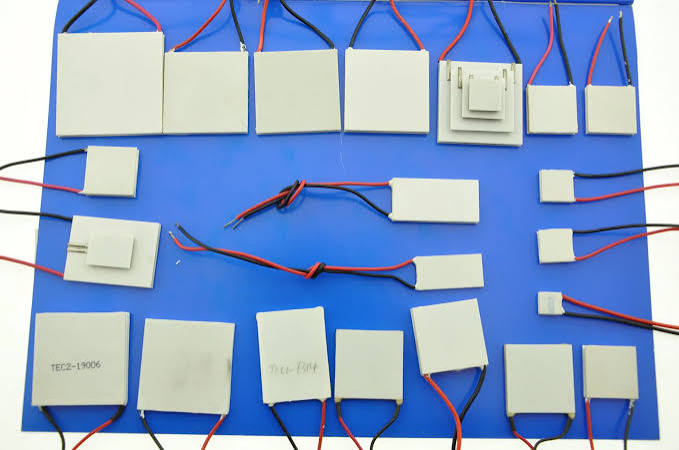
Bulk thermoelectric modules are becoming an important solution for industries that require reliable, compact, and precise temperature control across large-scale applications. Unlike traditional cooling systems that depend on compressors, refrigerants, and moving Thermoelectric Cooling Module Supplier mechanical components, thermoelectric technology uses the Peltier effect to transfer heat from one side of a module to the other. This solid-state approach makes thermoelectric modules useful in electronics, medical equipment, industrial machinery, food storage, automotive systems, and many other applications.
For companies purchasing large quantities, choosing the right thermoelectric module is essential. Performance, durability, electrical specifications, thermal requirements, and supplier reliability can all influence the success of a large-scale project. Understanding these factors helps businesses select suitable products while maintaining consistent quality and controlling costs.
What Are Bulk Thermoelectric Modules?
A thermoelectric module is a semiconductor-based device designed to move heat when electrical current passes through it. It generally contains multiple pairs of semiconductor materials positioned between ceramic plates. When power is applied, one surface becomes cold while the opposite surface becomes hot.
Bulk thermoelectric modules are simply modules purchased or manufactured in larger quantities for commercial, industrial, or production requirements. They can be supplied in standard configurations or customized according to specific temperature, voltage, current, size, and cooling requirements.
Because thermoelectric modules have no mechanical moving parts, they can operate quietly and require relatively little maintenance. Their compact construction also allows manufacturers to integrate them into equipment where traditional cooling systems may be too large or complicated.
Why Large-Scale Applications Use Thermoelectric Modules
Large-scale applications often require temperature control that is consistent, predictable, and easy to integrate. Thermoelectric modules can provide several advantages in these environments.
One major benefit is precise temperature control. By controlling the electrical current supplied to the module, engineers can adjust the amount of heat transferred. This makes thermoelectric technology suitable for applications where maintaining a specific temperature range is important.
Another advantage is compact size. Thermoelectric modules can deliver cooling without requiring a large compressor assembly. This allows manufacturers to design smaller and more flexible equipment.
Reliability is another important factor. Since thermoelectric modules contain no moving mechanical components, there are fewer mechanical parts that can wear out during normal operation. Proper heat dissipation and electrical management can further improve operational life.
Common Large-Scale Applications
Bulk thermoelectric modules are used across numerous industries. In electronics, they can help control the temperature of lasers, sensors, cameras, processors, and other sensitive components. Maintaining stable temperatures can improve equipment performance and protect components from excessive heat.
Medical and laboratory equipment is another major application area. Thermoelectric cooling can be used in diagnostic instruments, sample storage systems, analytical equipment, and portable medical devices where accurate temperature management is required.
Industrial equipment may also use thermoelectric modules for cooling control systems, optical devices, sensors, and specialized machinery. Their compact design makes them particularly useful where conventional cooling equipment would occupy too much space.
Food and beverage equipment can benefit from thermoelectric technology as well. Small refrigeration systems, portable coolers, beverage dispensers, and temperature-controlled storage devices may incorporate thermoelectric modules.
Automotive and transportation systems are also potential applications. Thermoelectric technology can be incorporated into vehicle climate-control systems, electronic cooling systems, and specialized storage equipment.
Key Factors When Buying in Bulk
Purchasing thermoelectric modules in large quantities requires more consideration than simply comparing prices. The first factor is cooling capacity. A module must be capable of removing the required amount of heat under the intended operating conditions.
Voltage and current specifications are equally important. The module should match the power supply and control system used in the final equipment. Using an unsuitable electrical configuration can reduce efficiency or affect reliability.
The maximum temperature difference is another specification to consider. Different modules can achieve different temperature differentials depending on their construction and operating conditions.
Size and mounting configuration should also be evaluated. The module must fit correctly within the available mechanical space and maintain effective thermal contact with the surfaces it is cooling.
Quality consistency becomes especially important for bulk orders. If hundreds or thousands of modules are being installed in the same product, variations between individual units can create production and performance problems. Buyers should therefore evaluate manufacturing standards, testing procedures, material quality, and quality-control systems.
Choosing the Right Thermoelectric Cooling Module Supplier
Selecting a reliable Thermoelectric Cooling Module Supplier is an important part of any large-scale procurement project. A supplier should be able to provide detailed technical specifications, stable production capacity, consistent product quality, and appropriate customer support.
Before placing a bulk order, buyers should ask about production capabilities and quality-control procedures. It is also useful to request technical datasheets and performance information so engineers can determine whether the module matches the intended application.
Customization can be another important consideration. Some projects require specific dimensions, wire configurations, ceramic materials, electrical characteristics, or cooling performance. A supplier with suitable engineering and manufacturing capabilities may be able to provide customized solutions.
Lead times should also be considered. Large production projects depend on reliable component availability, so suppliers should be able to communicate realistic manufacturing and delivery schedules.
Benefits of Purchasing Thermoelectric Modules in Bulk
Bulk purchasing can provide several advantages for manufacturers. One of the most obvious is cost efficiency. Ordering larger quantities may reduce the average unit price and help businesses manage production budgets.
Bulk purchasing can also simplify supply-chain planning. Instead of repeatedly placing small orders, manufacturers can establish a more predictable inventory system.
Consistent sourcing is another advantage. Using modules from the same manufacturing specification can help maintain uniform performance across different batches of finished products.
For long-term projects, businesses may also negotiate supply agreements with manufacturers or suppliers. These arrangements can help establish stable pricing, production schedules, and technical support.
Installation and Thermal Management
Even a high-quality thermoelectric module requires proper installation to perform effectively. The hot side of the module must be connected to an appropriate heat sink or heat-dissipation system. If heat cannot be removed efficiently from the hot side, cooling performance can decline significantly.
Thermal interface materials may be used to improve contact between the module and heat-transfer surfaces. Mounting pressure should also be controlled carefully because excessive mechanical stress can damage the ceramic plates or internal semiconductor structure.
Electrical connections should be designed according to the manufacturer’s specifications. Appropriate power control can help prevent overheating and improve temperature stability.
Future of Bulk Thermoelectric Technology
The demand for compact and precise thermal-management solutions is expected to continue across electronics, healthcare, industrial automation, transportation, and other industries. As equipment becomes smaller and more electronically sophisticated, controlling component temperatures becomes increasingly important.
Advances in semiconductor materials, module construction, manufacturing processes, and thermal-management systems may improve the efficiency and performance of future thermoelectric products. This could make them increasingly attractive for specialized large-scale applications.
Conclusion
Bulk thermoelectric modules offer a practical solid-state approach to temperature control for many large-scale applications. Their compact construction, precise control, quiet operation, and lack of moving mechanical parts make them valuable in electronics, medical equipment, industrial systems, automotive products, and other technologies.
For businesses purchasing these modules in large quantities, selecting the correct specifications and a dependable supplier is essential. Cooling capacity, electrical requirements, dimensions, thermal management, quality consistency, customization options, and production capacity should all be considered before making a purchasing decision.
With proper selection and system design, bulk thermoelectric modules can provide dependable temperature management while supporting efficient and scalable manufacturing.