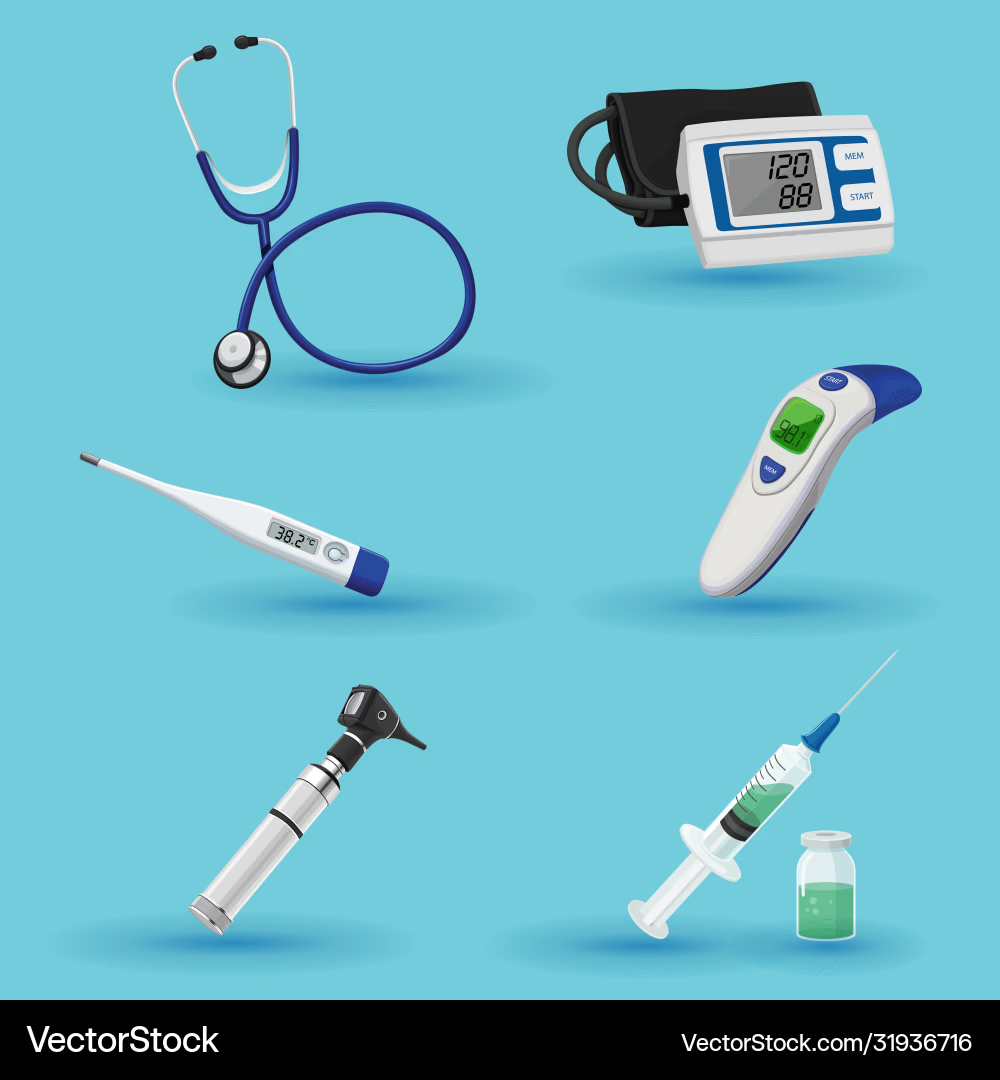
The world of healthcare has been profoundly transformed by technological advancements, particularly in the development and use of medical equipment. Over the past few decades, technology has not only improved patient outcomes but also increased the efficiency and accuracy of medical procedures. From diagnostic tools to treatment devices, the integration of cutting-edge technology has enabled medical professionals to provide better care while minimizing risks.
The Evolution of Medical Equipment
Medical equipment has come a long way from simple tools like stethoscopes and thermometers to highly sophisticated machines such as MRI scanners and robotic surgical systems. Early medical devices were often limited by mechanical design and manual operation, requiring significant skill and experience to yield accurate results. Today, the combination of digital technology, artificial intelligence, and advanced materials has allowed medical equipment to evolve into precise, automated, and highly reliable systems.
For instance, imaging devices like CT scans and MRI machines now utilize high-resolution digital sensors and computer algorithms to provide detailed images of the human body. This level of precision was unimaginable a few decades ago and has dramatically improved the ability to diagnose and monitor diseases at an early stage.
Integration of Artificial Intelligence
One of the most significant ways technology is revolutionizing medical equipment is through the integration of artificial intelligence (AI). AI-powered diagnostic tools can analyze vast amounts of medical data to identify patterns that human eyes might miss. This capability is especially critical in fields like radiology, pathology, and cardiology, where early detection can significantly impact patient outcomes.
Medical equipment enhanced with AI can assist in predicting disease progression, suggesting treatment options, and even personalizing therapies based on individual patient profiles. For example, AI algorithms can detect subtle anomalies in imaging scans that may indicate the early stages of cancer, allowing for timely intervention and improved survival rates.
Remote Monitoring and Wearable Devices
Another major technological advancement in medical equipment is the development of wearable devices and remote monitoring systems. Wearables like smartwatches and fitness trackers can now measure vital signs such as heart rate, blood pressure, oxygen saturation, and glucose levels in real time. These devices provide continuous health monitoring, alerting patients and healthcare providers to potential issues before they become critical.
Remote monitoring is particularly valuable for patients with chronic conditions such as diabetes, hypertension, and heart disease. Medical equipment that facilitates remote health monitoring reduces the need for frequent hospital visits, alleviates the burden on healthcare systems, and empowers patients to take a more active role in managing their health.
Robotics in Surgery
Robotics has also had a transformative impact on medical equipment, particularly in surgical procedures. Robotic-assisted surgery allows surgeons to perform complex operations with enhanced precision, flexibility, and control. These systems combine high-definition 3D visualization with robotic arms that can make precise movements, minimizing tissue damage and reducing recovery times.
Robotic surgical systems are not limited to large hospitals; they are increasingly being adopted in smaller healthcare facilities as costs decrease and training programs expand. This democratization of advanced surgical equipment ensures that more patients have access to minimally invasive procedures, improving outcomes and reducing hospital stays.
Smart Medical Devices and IoT
The Internet of Things (IoT) has brought another layer of intelligence to medical equipment. IoT-enabled devices can communicate with each other, share data in real time, and integrate with hospital management systems. This connectivity improves workflow efficiency, reduces human error, and enables more comprehensive patient care.
For example, smart infusion pumps can adjust medication dosages automatically based on real-time patient data, while connected diagnostic devices can transmit results instantly to electronic health records (EHRs). Such integration ensures that healthcare professionals have timely access to critical information, enhancing decision-making and patient safety.
3D Printing in Medical Equipment
3D printing technology has introduced new possibilities in the design and production of medical equipment. Custom prosthetics, implants, and anatomical models can now be created quickly and at a lower cost than traditional manufacturing methods. This technology enables personalized solutions that fit the unique anatomy of each patient, improving comfort and effectiveness.
Additionally, 3D printing allows rapid prototyping of medical instruments, which accelerates innovation in the healthcare industry. Hospitals and research institutions can now develop specialized tools for complex procedures, providing surgeons with equipment tailored to specific patient needs.
Enhancing Rehabilitation and Physical Therapy
Medical equipment has also benefited from technology in the field of rehabilitation and physical therapy. Devices such as exoskeletons, robotic rehabilitation machines, and virtual reality (VR) therapy systems are helping patients recover more effectively from injuries and surgeries. These devices provide precise guidance and resistance control, enabling patients to perform exercises correctly and safely.
Virtual reality and gamification in physical therapy not only improve patient engagement but also offer real-time feedback on performance. By combining technology with traditional rehabilitation methods, medical equipment is making recovery faster, more enjoyable, and more efficient.
Improving Patient Safety
Technology has greatly enhanced patient safety, which is a crucial aspect of medical care. Modern medical equipment comes equipped with advanced sensors, alarms, and automated controls that prevent errors. For example, automated medication dispensers reduce the risk of dosing mistakes, while smart monitoring devices can alert healthcare staff to changes in a patient’s condition immediately.
Furthermore, predictive analytics and AI-driven risk assessments allow hospitals to identify high-risk patients and implement preventive measures. This proactive approach, supported by technologically advanced medical equipment, significantly reduces complications and improves overall patient outcomes.
Future Trends in Medical Equipment
The future of medical equipment promises even greater integration of technology and innovation. Developments in nanotechnology, biotechnology, and AI will lead to equipment that is more compact, intelligent, and capable of performing complex tasks with minimal human intervention. Wearable sensors could evolve into implantable devices that provide continuous monitoring and treatment, while telemedicine platforms may integrate seamlessly with advanced diagnostic tools.
Personalized medicine will also drive innovation, as medical equipment becomes capable of analyzing genetic and molecular data to tailor treatments for individual patients. These advancements will not only improve healthcare outcomes but also make medical care more accessible, efficient, and cost-effective.
Conclusion
Technology is undeniably revolutionizing medical equipment, reshaping the way healthcare is delivered. From AI-powered diagnostic tools to robotic surgical systems, wearable devices, and IoT-enabled equipment, every aspect of patient care is being enhanced by innovation. These advancements lead to more accurate diagnoses, better treatment options, faster recovery times, and improved patient safety.
As technology continues to advance, medical equipment will become even more sophisticated, personalized, and interconnected, opening new horizons in healthcare. The fusion of technology and medicine promises a future where medical equipment is not just a tool but a transformative partner in ensuring the health and well-being of patients worldwide. The ongoing evolution of medical equipment is a testament to the power of innovation, demonstrating how technology can profoundly improve human lives.